
Plantar Fasciitis: Symptoms, Causes, and Treatment
That sharp pain under your heel when you get out of bed can make the first few steps of the day miserable. It may ease once you start moving, only to return after a long shift, a walk, or time on your feet. One common reason for this pattern is plantar fasciitis.
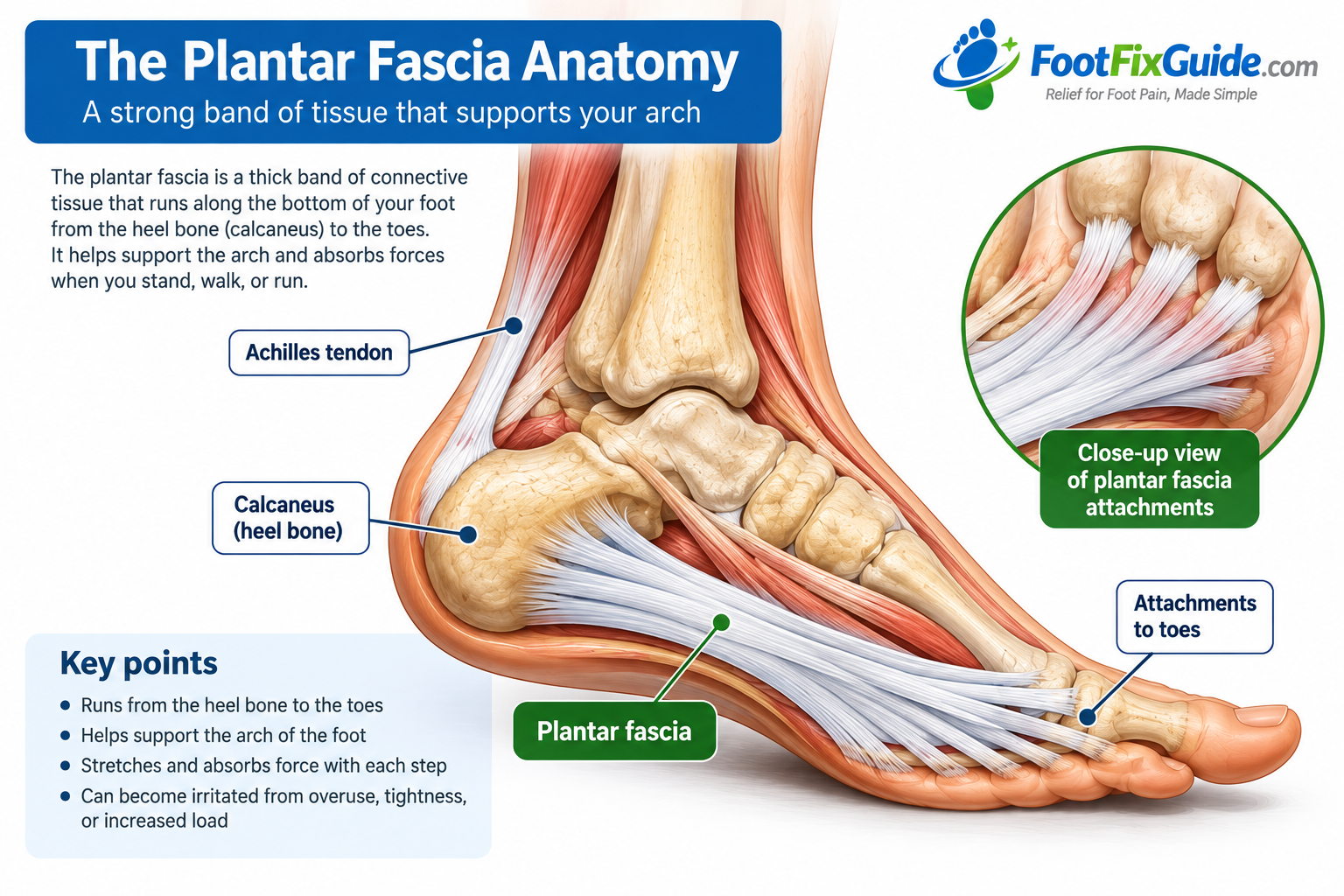
Plantar fasciitis is pain associated with the plantar fascia, a strong band of tissue running along the bottom of your foot from your heel toward your toes. It helps support the arch and handles forces when you stand and walk. The condition is common, but not every sore heel is plantar fasciitis, as the American Academy of Orthopaedic Surgeons (AAOS) explains. The good news is that most people improve without surgery. The best starting point is usually a combination of sensible activity changes, stretching, and footwear that feels supportive—not a rush to buy the latest “heel pain cure.”
What plantar fasciitis feels like
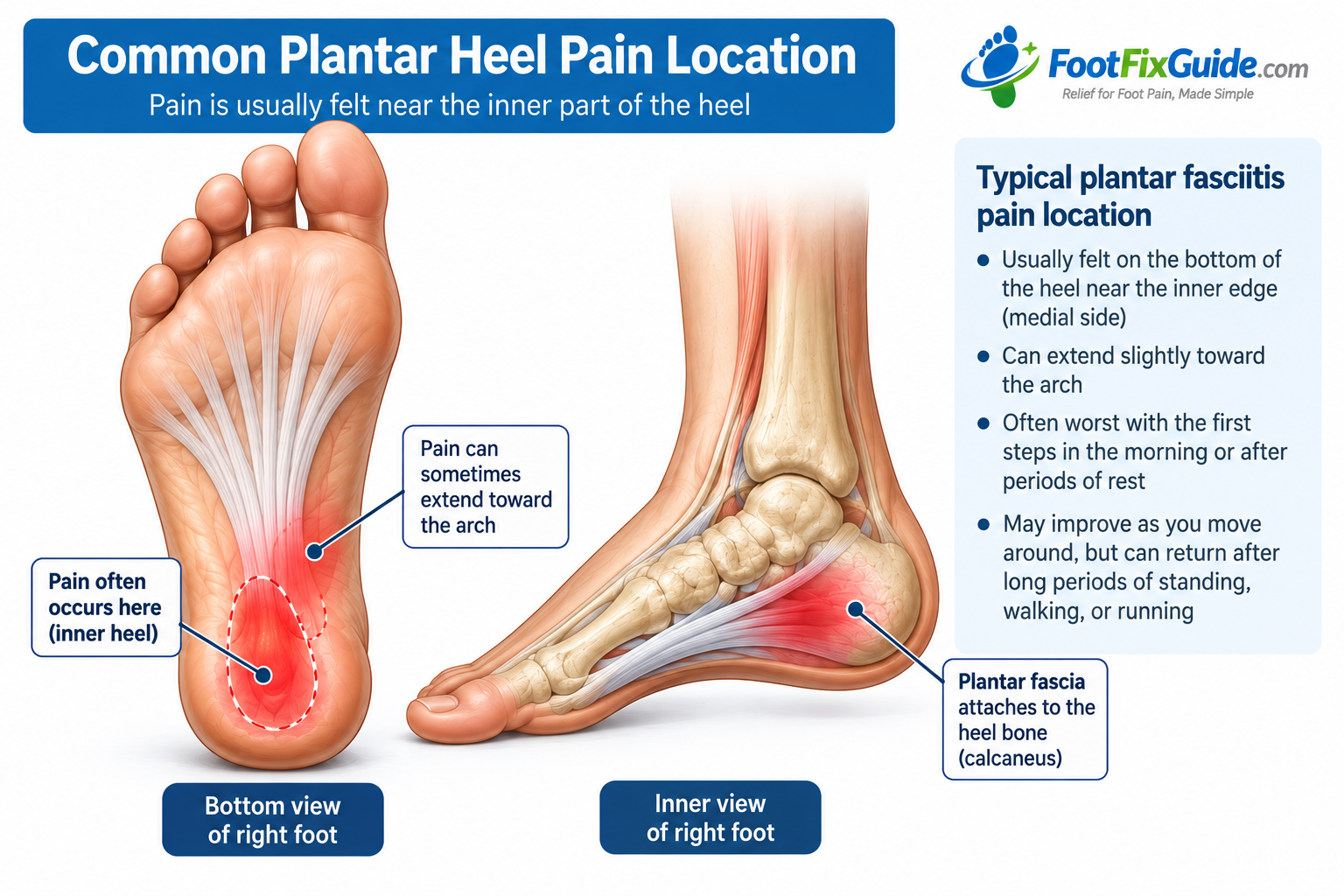
The classic sign is pain beneath the heel, often near its inner edge. The NHS description of plantar fasciitis also identifies pain after rest and worsening discomfort with prolonged standing, walking, or running. The first steps after waking up or sitting for a while can be especially painful. As the foot warms up, the pain may settle. Longer periods of standing, walking, or running can bring it back.
Some people feel pain extending toward the arch. Others describe a stabbing sensation, while some notice a dull ache. Those descriptions alone cannot confirm a diagnosis. Tingling, numbness, burning, pain after a sudden injury, or pain in a different part of the foot may point to another problem and deserves a closer look.
Why it happens
Your plantar fascia helps carry the load of everyday movement. When the demands on your foot exceed what the tissue is ready to tolerate, heel pain can develop. A sudden increase in running or walking, long hours standing, limited ankle flexibility, and changes in footwear may all matter. Foot shape and body weight can also affect the loads involved, but no single factor explains every case. The AAOS risk-factor overview describes these contributors.
Despite the “-itis” ending, plantar fasciitis is not always simply an inflamed tissue. Long-lasting symptoms can involve tissue changes associated with repeated strain; the term plantar fasciopathy is sometimes used for this broader picture. That is one reason a quick anti-inflammatory fix or a new insole is not a guaranteed answer.
How a clinician checks for plantar fasciitis
A clinician usually starts by asking where the pain is, when it is worst, how it began, and whether your activity recently changed. They may press along the underside of the heel, check how the foot and ankle move, and look at how you walk. A typical symptom pattern and examination are often enough to guide care, as described in the AAOS diagnostic overview.
X-rays, ultrasound, or MRI are not routinely necessary for straightforward plantar fasciitis. Imaging may be useful when the history or examination suggests another cause, such as a stress injury. A heel spur seen on an X-ray does not automatically explain the pain, and many people with heel spurs have no symptoms, according to AAOS.
What usually helps
Start by making the painful load more manageable. If running or long walks clearly worsen your heel, temporarily reduce them and consider lower-impact movement, such as cycling or swimming, while symptoms settle. AAOS recommends lower-impact activities such as cycling or swimming as options when impact exercise aggravates the heel. You do not necessarily need to stop all activity. The goal is to avoid repeatedly aggravating the foot while maintaining what you can comfortably do.
Stretching is a core part of treatment. The 2023 plantar heel pain clinical practice guideline recommends stretches aimed at the plantar fascia and calf muscles for pain and function. It also supports resistance exercises that strengthen the foot and ankle. A physical therapist can help tailor the exercises and increase them gradually if you are unsure what is appropriate. Exercises should be manageable; sharply worsening pain is a reason to adjust the plan rather than push through.
Footwear can make daily movement more comfortable. Look for shoes that fit well, have enough room for your toes, and provide cushioning and support that feel right for your foot. If walking barefoot on hard floors makes symptoms worse, wearing comfortable supportive shoes indoors may help. No particular brand or shoe feature is proven to work for everyone. The NHS self-care guidance recommends cushioned, supportive footwear and avoiding barefoot walking on hard surfaces when painful.
Insoles or orthotics can be useful as part of a broader plan, but they are not a stand-alone cure. The 2023 clinical guideline specifically advises against using orthoses alone for short-term pain relief. Before paying for expensive custom inserts, consider whether an appropriate off-the-shelf option, better-fitting shoes, and a consistent exercise plan meet your needs.
For stubborn first-step pain, a clinician may recommend a night splint. The 2023 guideline recommends a one- to three-month night-splint program for people who consistently have pain with their first steps in the morning. Splints can be inconvenient, so they are worth discussing in the context of your symptoms rather than buying automatically.
Other options, including taping, hands-on physical therapy, and selected procedures, may be considered depending on how long symptoms have lasted and what has already been tried. Injections and surgery have tradeoffs and are not typical first steps; the NHS treatment overview places these among options considered when initial treatment has not helped. If simple care is not helping, a clinician can review the diagnosis and the next options instead of assuming you just need a more expensive product.
How long does recovery take?
Plantar fasciitis often improves gradually, not overnight. The American Academy of Orthopaedic Surgeons says more than 90% of patients improve within 10 months of starting simple treatment. That is a broad estimate, not a personal deadline: some people improve sooner, while others need a longer plan or reassessment.
Pay attention to trends over several weeks. Are the first few steps less painful? Can you stand or walk a little longer before symptoms build? Does the heel recover more quickly after activity? These practical changes can be more useful than judging treatment by one unusually good or bad morning.
When heel pain needs medical attention
Arrange a medical assessment if the pain is severe, keeps returning, is worsening, or has not improved after about two weeks of self-care. Seek assessment for tingling or loss of feeling, and don't assume new foot pain is routine plantar fasciitis if you have diabetes. These are among the NHS reasons to seek medical advice. Sudden severe pain after an injury, inability to bear weight, major swelling, or signs of infection warrant prompt medical attention.
If the pattern does not fit typical plantar fasciitis, the answer may be a different condition rather than a failed shoe or insole. Nerve problems, stress injuries, and other causes of heel pain need different evaluation and care.
A practical place to start
If your symptoms fit the familiar first-step heel-pain pattern, begin with a few sensible changes: reduce activities that repeatedly aggravate the heel, try appropriate plantar fascia and calf stretching, wear comfortable shoes, and monitor whether your walking and morning pain improve. You do not need to buy multiple products at once to find out whether these basics help.
If progress stalls, or your symptoms are unusual, get the diagnosis checked. The aim is not to find a magic shoe. It is to understand what is hurting, manage the load on your foot, and choose treatments that have a reasonable chance of helping.