
Plantar Fasciitis Stretches and Exercises: How to Start and Build a Routine
The first few steps out of bed can make plantar fasciitis feel like a problem you need to solve immediately. You might try stretching your foot against the floor, walking it off, or searching for a routine that promises fast relief. But a useful exercise plan is rarely about doing more movements or stretching harder. It's about choosing a few movements that make sense for your symptoms, learning how your heel responds, and gradually building the strength and comfort you need for everyday life.
Stretching and strengthening have different jobs. A gentle stretch may help you move more comfortably, particularly when your heel is sore after resting. Strengthening helps the foot and ankle handle the demands of walking, standing, and eventually more challenging activity. The 2023 plantar heel pain clinical practice guideline recommends plantar fascia and calf stretching as well as foot and ankle resistance exercise. That doesn't mean everyone needs the same exercises, the same number of repetitions, or the same progression.
If you're not sure whether your heel pain is plantar fasciitis, start with our plantar fasciitis overview. The routine below is educational guidance for a typical plantar-heel-pain pattern, not a substitute for an individual assessment. If you have a recent injury, cannot bear weight, or have unusual numbness or worsening symptoms, get medical advice before treating the problem as routine plantar fasciitis.
Start With a Gentle Plantar Fascia Stretch
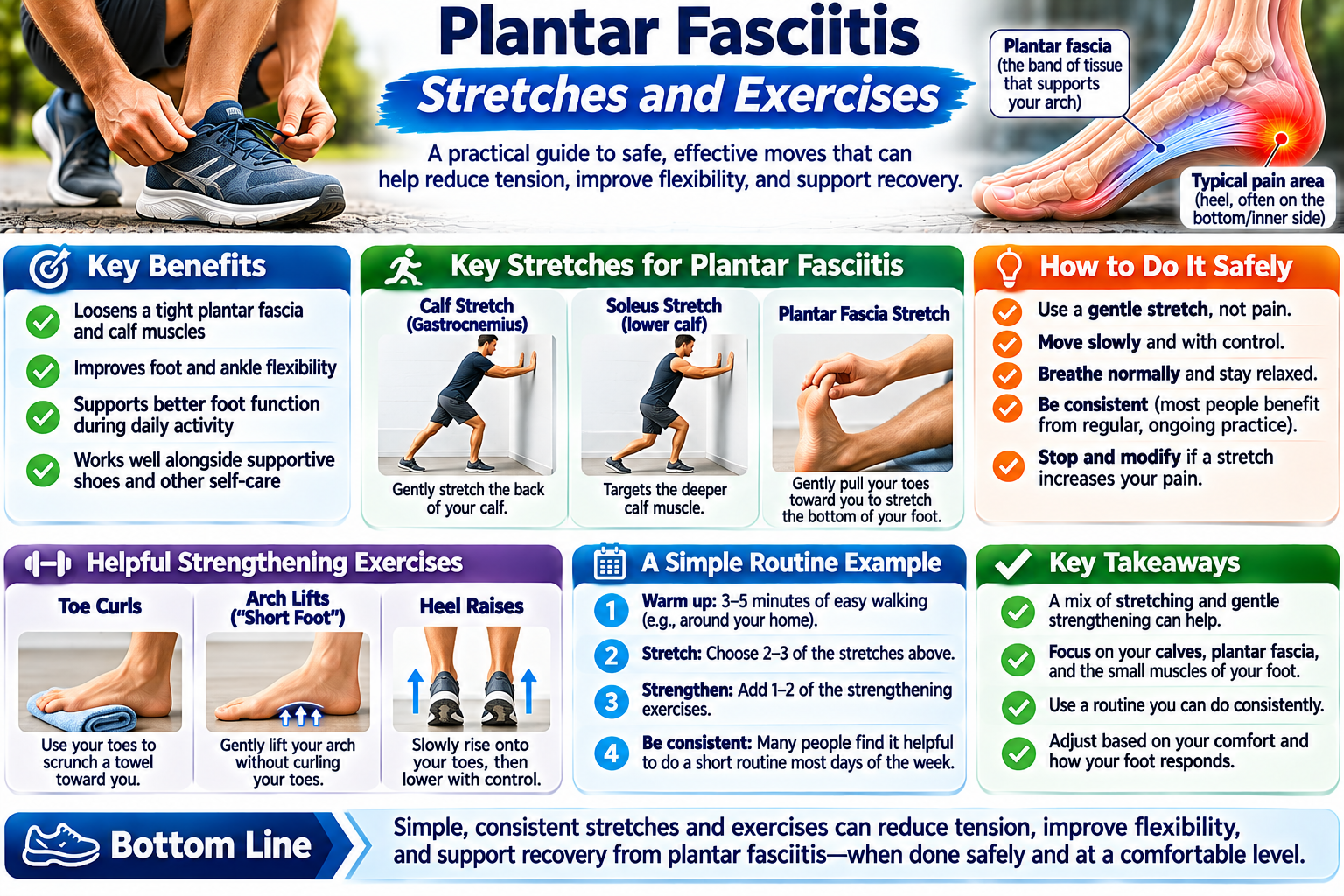
The plantar fascia is a strong band of tissue that runs beneath your foot from the heel toward the toes and helps support the arch. When you bend your toes upward, you put tension through that band. That makes the seated plantar fascia stretch different from simply pulling on your calf: it targets the tissue associated with the familiar pain under the heel.
This can be a useful place to begin if your worst pain arrives when you stand after sleeping or sitting. Instead of waiting until your first step hurts, you can try the movement gently while you're still seated. The idea isn't to force the tissue into a deep stretch. You're giving your foot a controlled movement before asking it to carry your weight.
How to Do the Seated Plantar Fascia Stretch
The American Academy of Orthopaedic Surgeons (AAOS) describes a similar stretch using brief holds and repeated movements, including before the first steps in the morning. You can also try it after a long period of sitting. A gentle pulling sensation is different from sharp pain; if the movement produces a stabbing sensation or leaves your heel more painful, reduce the stretch or stop.
Some people have trouble reaching their toes or holding this position. That doesn't mean they need to force their foot into it. A physical therapist can demonstrate a more accessible variation. The best stretch is one you can perform with control, not one that makes you wince.
Why Calf Stretching Can Be Part of Plantar Fasciitis Care
Your foot doesn't work separately from your ankle and calf. Every step involves your lower leg moving over the foot, and limited ankle motion can change how that movement feels. That's one reason calf flexibility is commonly considered in plantar heel pain rehabilitation. It isn't proof that tight calves caused your plantar fasciitis, but it may be a useful part of the treatment plan.
Two wall stretches look almost identical at first. The difference is what you do with your back knee. Keeping it straight emphasizes the larger gastrocnemius muscle. Bending it shifts the emphasis toward the deeper soleus muscle. You don't need to memorize the anatomy to benefit from the distinction; just understand that the two positions work on somewhat different parts of the calf.
Straight-Knee Calf Stretch for Plantar Fasciitis
Don't lean so far that your back heel lifts or your foot twists sharply outward. If the stretch is uncomfortable under the heel rather than through the calf, shorten your stance. The AAOS foot and ankle conditioning program describes controlled heel-cord stretching with attention to positioning.
Bent-Knee Calf Stretch for Plantar Fasciitis
The AAOS conditioning program includes both straight-knee and bent-knee heel-cord stretches. If your heel keeps lifting, move the back foot closer. These movements should feel deliberate and manageable. Stretching harder is not a shortcut to faster recovery.
When to Add Strengthening Exercises for Plantar Fasciitis
Stretching may be the easiest starting point, but it isn't the entire plan. Think about what your feet do on a normal day: they support you as you stand in the kitchen, walk through a store, climb stairs, or work a long shift. Improving the foot and ankle's capacity to handle those demands is part of why rehabilitation often includes resistance exercise.
The 2023 clinical practice guideline supports foot and ankle strengthening, and a 2025 American Family Physician guideline summary discusses strengthening alongside stretching for pain and function. That supports the general approach, not the idea that one specific home exercise cures plantar fasciitis.
If your heel is still highly sensitive, start with movements that place less weight on it. If walking and standing have become more comfortable, supported weight-bearing exercises may be a reasonable next challenge. There is no prize for advancing quickly; what matters is how your foot responds during the exercise and afterward.
Seated Towel Scrunches for Foot Strength
Place a small towel on the floor and rest your foot on it while sitting. Slowly use your toes to gather a little of the towel toward you, then release. Repeat for several comfortable movements. You should feel the small muscles of the foot working without gripping so forcefully that your toes cramp.
Towel scrunches are an optional, low-equipment way to practice foot-muscle activity. They aren't a proven stand-alone treatment for plantar fasciitis. If they repeatedly provoke heel pain, leave them out and consider a different strengthening movement with professional guidance.
Supported Heel Raises for Calf and Ankle Strength
Heel raises can be useful because they train the calf and ankle to handle load, but they can also be too demanding for an irritable heel. Start on level ground rather than dropping your heels off a step. If two-legged raises become comfortable over time, a physical therapist can help you decide whether more repetitions, resistance, or single-leg work is appropriate.
How to Build a Plantar Fasciitis Exercise Routine
A routine doesn't have to fill half an hour to be worthwhile. In fact, when you're trying to understand what helps, a short plan is often easier to repeat and easier to adjust. Begin with the seated plantar fascia stretch, add one or both calf stretches if they feel comfortable, and introduce a strengthening movement when your foot is tolerating the simpler work.
For someone whose mornings are the hardest part of the day, the first priority may be a few gentle plantar fascia stretches before standing. Someone whose first-step pain has improved but whose heel still complains after longer walks may benefit from gradually building strength and activity tolerance. And someone who stands all day at work may need a smaller exercise session on demanding days than on days off.
A practical starting pattern could be:
- Before your first steps: Try a few gentle seated plantar fascia stretches if that familiar morning pain is your main issue. - At a comfortable point in the day: Use straight-knee and bent-knee calf stretches without forcing the position. - When your heel tolerates it: Add a small amount of seated foot work or supported heel raises, leaving room to recover between more demanding sessions.
These are examples, not a prescribed frequency or a promise of results. Studies use different exercise schedules, and the 2023 guideline doesn't establish one universally best home schedule for everyone. Consistency and tolerability matter more than chasing an exact repetition count from the internet.
What if Plantar Fasciitis Exercises Make Your Heel Hurt More?
Some discomfort during a new movement doesn't always mean you've caused harm, but sharp pain or a clear worsening pattern isn't something to push through. Pay attention to what happens after the exercise, too. A session that seems fine in the moment but repeatedly leaves you much more painful the next morning may be too demanding for now.
It's also easy to blame the newest exercise when several things changed at once. Perhaps you added heel raises on the same day you worked a longer shift and walked farther than usual. Rather than abandoning every exercise, look at the overall load and scale back the newest or most demanding part. Return to a level you can manage, then build more gradually.
If symptoms become severe, keep worsening, or aren't improving with reasonable self-care, ask a clinician to reassess the problem. The NHS plantar fasciitis guidance recommends assessment for severe or persistent symptoms and for concerning changes such as tingling or loss of sensation. An injury, marked swelling, or inability to bear weight deserves prompt evaluation rather than another stretching attempt.
Do You Need Special Equipment for Plantar Fasciitis Exercises?
It's easy to end up with a shopping list: a stretching strap, massage ball, rocker, slant board, and several gadgets promising relief. But the movements in this article mostly require a chair, a wall, a towel, and something sturdy to hold for balance. You don't need to purchase a collection of equipment before beginning a sensible routine.
A ball or cool bottle rolled gently beneath the foot may feel soothing to some people. The AAOS conditioning program includes a ball-roll option, but temporary comfort from rolling isn't a substitute for an appropriate strengthening and activity plan. A tool may be worth considering when it makes a useful movement more accessible or comfortable—not simply because it has plantar fasciitis printed on the package.
Making Exercise Fit Your Walking, Work, and Recovery
Exercises happen in the middle of real life, not in isolation. If you spend eight hours standing, your heel has already handled a substantial amount of activity before you get home. A demanding strengthening session after every shift might be more than it currently tolerates. On those days, a brief gentle routine may make more sense than trying to complete every exercise.
Running presents a different challenge. A few minutes of stretching won't cancel out a sudden jump in mileage. If impact consistently aggravates your heel, reducing it temporarily while maintaining comfortable movement may help. The AAOS plantar fasciitis guide discusses lower-impact options such as cycling and swimming when running or walking is painful.
Judge the routine by what changes over the next several weeks. Are the first steps easier? Can you manage ordinary errands with less discomfort? Does your heel recover more quickly after a busy day? Those signs tell you more than whether you can pull your toes farther back or perform an impressive number of heel raises.
If you need a broader picture of symptom management, our plantar fasciitis overview explains common treatment options. The exercises here are one part of that picture, not a substitute for checking a diagnosis that doesn't fit or a recovery plan that isn't working.
Common Questions About Plantar Fasciitis Stretches and Exercises
Should I stretch before getting out of bed?
Is stretching or strengthening better for plantar fasciitis?
Can I do heel raises when my heel hurts?
How soon should I expect exercise to help?
Should I exercise through plantar fasciitis pain?
A Better Goal Than Doing Every Exercise
You don't need to master a dozen stretches to make progress. Start with movements you understand, use a level of effort your heel tolerates, and give yourself time to see how your foot responds. As everyday walking becomes more comfortable, strengthening and gradual activity increases may help you return to the things that matter to you.
The best routine isn't the longest or most complicated one. It's a manageable plan that helps your foot become more reliable over time—and that you can change when your symptoms tell you it needs to change.