
When to See a Doctor for Heel Pain
A sore heel can be easy to dismiss at first. Maybe it aches when you get out of bed, then settles once you start moving. Or perhaps you notice it after a long workday and assume a different pair of shoes will take care of it. But when the pain keeps coming back, it gets harder to know whether you should give it more time or make an appointment.
The answer depends on more than how much your heel hurts at one particular moment. How the pain began, whether you can put weight on the foot, what other symptoms you have, and whether things are improving all help determine what to do next. Some situations call for prompt medical attention. Others deserve a routine appointment, while mild pain without warning signs may be reasonable to monitor briefly at home.
You don't need to diagnose the problem yourself to make that decision. What matters is recognizing when the pattern has moved beyond something you should keep managing on your own. Both the NHS heel-pain guidance and Mayo Clinic's advice about heel pain distinguish between symptoms that need urgent care and those that can be assessed through a scheduled visit.
When Heel Pain Requires Urgent Medical Attention
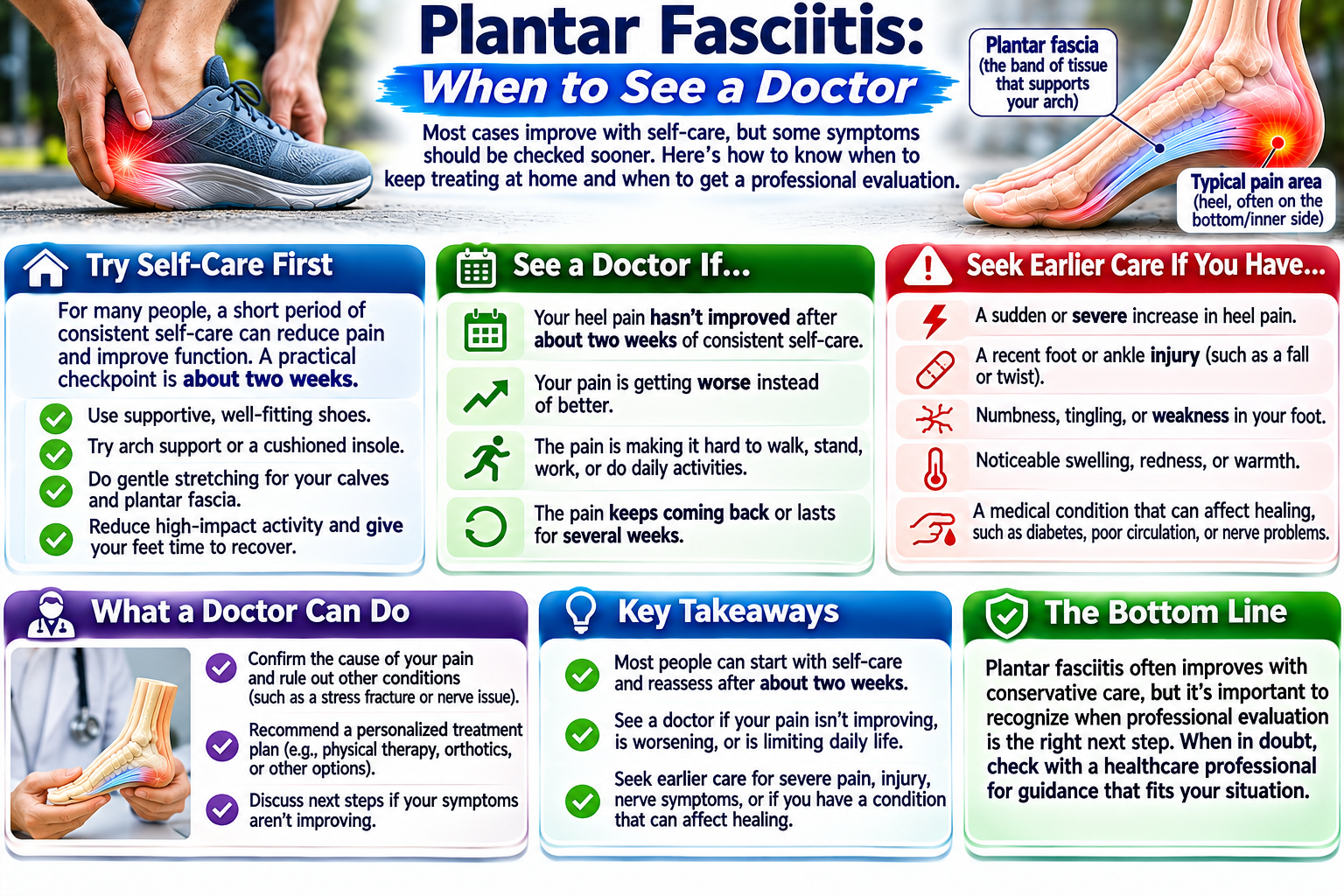
A heel that gradually becomes sore after more walking is different from a heel that suddenly hurts after a fall, a jump, or an awkward step. If the pain began with an injury and you cannot bear weight, the foot looks deformed, or swelling and bruising develop quickly, seek urgent medical assessment rather than trying to walk it off. Those signs can point to a fracture or another significant injury. The NHS lists sudden severe pain, a popping sound, difficulty walking, and changes in foot shape among warning signs that need urgent evaluation.
Pay particular attention to a sudden pop or snap at the back of the ankle. Someone with an Achilles tendon injury may describe feeling as if they were kicked in the heel, even when nobody touched them. Pushing off the ground or rising onto the toes may suddenly become difficult. Being able to move the ankle a little does not rule out a serious tendon injury, so this is not something to test repeatedly with stretches or heel raises.
Infection is another reason not to wait. A foot that becomes markedly red, hot, swollen, and painful—especially with fever or feeling generally unwell—needs prompt medical assessment. If you have an open wound with spreading redness or other signs of infection, seek care promptly. Mayo Clinic's foot-pain guidance describes symptoms that warrant urgent attention. An obvious deformity, exposed bone, or severe bleeding after an injury calls for emergency care.
The common thread is that these symptoms suggest something more than routine overuse pain. You don't have to work out whether it is a broken bone, tendon rupture, or infection before getting help. The purpose of urgent evaluation is to find out safely.
When to Schedule a Doctor's Appointment for Heel Pain
Not every reason to see a clinician involves an emergency. In fact, many people should make an appointment simply because the heel pain is beginning to shape their everyday life. If you are limping through work, skipping activities you normally enjoy, or planning your day around avoiding steps, the problem deserves attention even if you cannot recall a specific injury.
The direction of the symptoms matters, too. Imagine that you start walking more for exercise and develop mild soreness beneath one heel. You shorten your walks, wear comfortable shoes, and notice steady improvement over the next several days. That is a different situation from someone whose pain begins earlier on every walk, returns after every shift, and eventually makes ordinary errands difficult. The second pattern is not a reason to keep testing more products; it is a reason to have the foot examined.
The NHS recommends medical advice when heel pain is severe, worsening, repeatedly returns, interferes with normal activities, or has not improved after about two weeks of self-care. Two weeks is a checkpoint for mild symptoms, not a waiting period you must complete. Pain that is rapidly worsening or significantly limiting your ability to function deserves earlier assessment.
Pain that continues while you are resting also changes the picture. Heel discomfort that occurs mainly after a long day may have a different explanation from pain that persists when the foot is unloaded or wakes you at night. Mayo Clinic's heel-pain guidance includes persistent pain and pain at rest among reasons to seek an appointment. Those patterns do not automatically mean something serious is wrong, but they are worth discussing rather than assuming the problem is plantar fasciitis.
Why Numbness, Tingling, or Burning Deserves a Closer Look
People often describe plantar fasciitis as pain under the heel, especially with the first steps after sitting or sleeping. Burning, pins and needles, numbness, or a loss of feeling tells a somewhat different story. Those sensations can involve nerves or other conditions, and they should not be treated as proof that your arch needs more support.
For example, someone who feels a sharp ache beneath the heel each morning may have a familiar plantar-heel-pain pattern. Someone whose discomfort travels toward the toes and includes tingling may need a different examination. The NHS specifically advises assessment when heel pain comes with tingling or loss of sensation.
If these symptoms are new, persistent, or getting worse, arrange medical evaluation. New weakness or rapidly progressing loss of sensation warrants prompt medical advice. The point is not to assume a nerve problem from one symptom, but to recognize that changing sensation is not something to manage indefinitely by swapping shoes and insoles.
Heel Pain With Diabetes Calls for Extra Caution
Heel pain deserves a different level of attention when you have diabetes. Nerve damage can reduce your ability to feel pressure, blisters, or injuries, while circulation and healing problems can make even a small wound more consequential. A foot problem may therefore need attention before the pain becomes severe—or even when there is surprisingly little pain.
Suppose a new pair of shoes rubs against your heel. Without diabetes, you might notice the irritation quickly and stop wearing the shoes. With reduced sensation, that same rubbing could create a blister or sore before you realize anything is wrong. This is why the NHS advises people with diabetes and heel pain to seek medical advice, rather than assuming it is routine plantar fasciitis.
Look for visible changes as well as pain: blisters, cuts, sores, new swelling, redness, warmth, or skin that is breaking down. A wound that is not healing, a newly hot or swollen foot, or signs of infection deserve prompt assessment. The National Institute of Diabetes and Digestive and Kidney Diseases explains diabetic foot warning signs and daily foot care. Don't continue putting pressure on a concerning area while waiting to see whether a different insole helps.
When Mild Heel Pain Can Be Managed at Home
There is also a middle ground between ignoring heel pain and booking an urgent appointment for every ache. If discomfort developed gradually, remains mild, and is not accompanied by injury, difficulty bearing weight, unusual sensory changes, or other warning signs, a short trial of sensible self-care may be reasonable.
Start by looking at what changed. Have you recently doubled your walking distance, taken longer shifts, or spent more time barefoot on a hard floor? You may be able to reduce the most aggravating activity for a while without stopping all movement. Comfortable, well-fitting shoes you already own may be enough to make walking more tolerable. The NHS heel-pain self-care recommendations include adjusting activity, using appropriate footwear, and considering gentle stretching when suitable.
You can also try a cold pack wrapped in a towel for a short period if it feels helpful; avoid placing ice directly against your skin. But don't turn self-care into an endurance test. If a stretch sharply worsens pain, or if you suspect an injury, stop and get advice rather than pushing through it.
The most useful measure is the trend over several days. Are ordinary steps getting easier? Is the pain returning less often? Can you get through a normal day with less discomfort? Improvement supports continuing cautiously. If symptoms worsen, change character, interfere with daily life, or fail to improve after roughly two weeks, arrange an appointment. And you do not need to buy custom orthotics or several new pairs of shoes just to find out whether basic adjustments help.
Which Clinician Should You See for Heel Pain?
If you don't know what is causing the pain, a primary care clinician is a reasonable place to start. A podiatrist focuses on foot and ankle conditions, while sports medicine clinicians and orthopedic specialists may be helpful when the history suggests a particular injury or a more complex problem. Physical therapists may be involved in treatment and rehabilitation once the likely cause is understood.
You don't need to choose the perfect specialist or arrive with your own diagnosis. The first useful step is often a conversation about where the pain occurs, how it began, and how it behaves, followed by an examination of the foot and ankle. A clinician can then decide whether additional testing or referral is warranted. The AAOS overview of plantar fasciitis describes how symptoms and physical examination commonly guide evaluation, with imaging used when another cause needs consideration.
That also means an X-ray or MRI is not automatically the best first step. A scan can answer certain questions, but it does not replace a careful history and examination. If imaging is suggested, it is reasonable to ask what the clinician is looking for and how the result would affect your care.
How to Make Your Heel-Pain Appointment More Useful
Think of the visit as a chance to tell the story of your symptoms, not just report a pain score. The clinician may learn more from hearing that your first five steps are painful but the discomfort settles after breakfast than from hearing only that your heel hurts “a lot.” Likewise, pain that begins halfway through a run and gets progressively worse suggests a different set of questions.
Before your appointment, jot down when the pain began, where it sits, what makes it better or worse, and whether you remember an injury or a recent change in activity. Mention whether it occurs after rest, during walking, or when you are off your feet. If you have tried reducing activity, changing footwear, or another simple measure, explain what happened. Your usual work or walking shoes may also be useful to bring if footwear seems relevant.
Don't leave out symptoms that seem unrelated, such as numbness, swelling, fever, or a history of diabetes. These details can change what the clinician checks. And if your main concern is getting through a work shift or returning to running, say so. A useful plan should account for what your feet need to do in real life.
Common Questions About When to See a Doctor for Heel Pain
Should I wait two weeks before seeing a doctor for heel pain?
Is morning heel pain always plantar fasciitis?
Can I go to urgent care for heel pain?
What if my heel only hurts after standing all day?
Will a doctor automatically order an X-ray or MRI?
Making the Right Decision for Your Heel
You don't have to wait until your heel pain is unbearable to ask for help. And you don't have to treat every uncomfortable step as an emergency. What matters is whether the symptoms fit a mild, improving pattern or whether something about the injury, your ability to walk, your sensation, or your overall health calls for a closer look.
If the pain is mild and steadily improving, a short period of thoughtful self-care may be enough. If it keeps returning, changes how you walk, or refuses to settle, make an appointment. If it follows a significant injury or comes with serious warning signs, don't wait. The goal isn't to find the perfect shoe or guess the right diagnosis from a search result. It's to choose the next step that gives your heel the attention it actually needs.